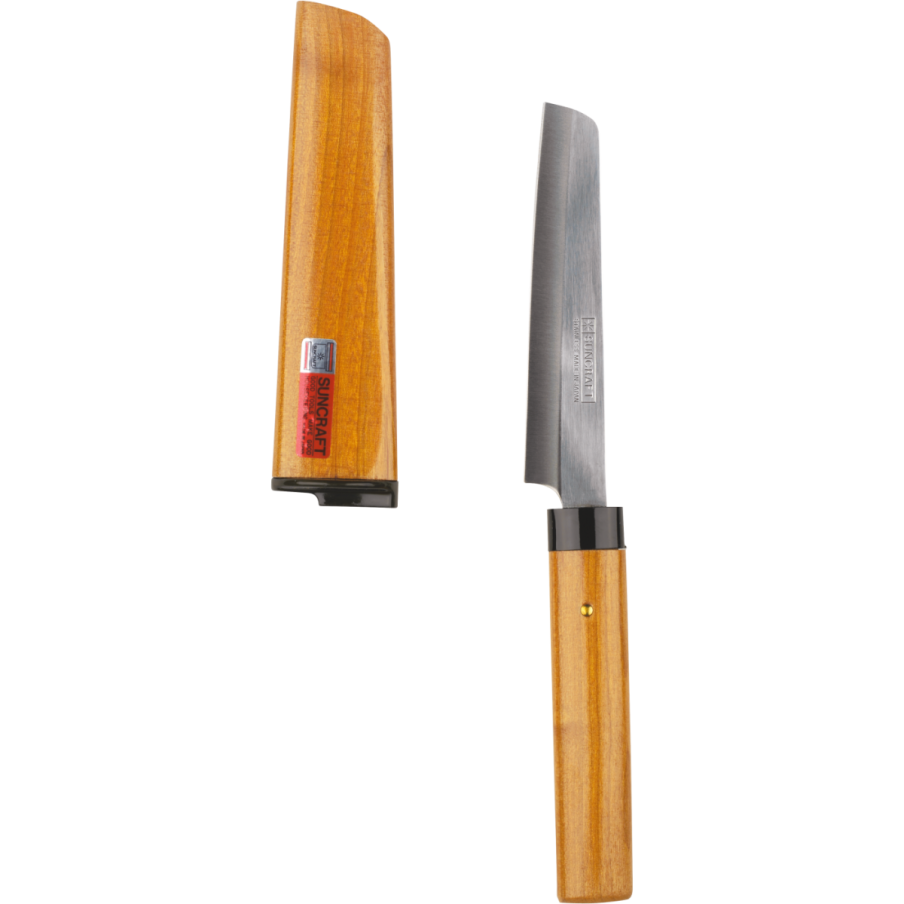
Japanese knives should not be treated as all-purpose kitchen tools. Unlike Western knives often used to cut, scrape or pry, they require greater precision and care. When properly maintained, they will last for many years and deliver unmatched sharpness.
Their high-carbon steel is harder and sharper, but also more delicate — it requires careful, respectful handling. Treat your Japanese knives with the same care as your finest glassware!
Common mistakes to avoid:
- Never soak wooden handles in water.
- Do not wash knives in the dishwasher.
- Store separately, avoiding contact with other utensils.
- Avoid cutting bones or frozen foods.
- Do not force the blade on hard surfaces (countertops, plates, etc.).
For optimal maintenance:
- Hand wash and dry carefully after each use.
- Apply a light coat of Niwaki Camellia Oil if the knife is not used regularly.
- Sharpen every couple of weeks with a Niwaki whetstone (#1000 or combination).
- Take care when cutting hard foods (pumpkin skins, squash, etc.).